At first glance, a cheap website feels like a smart move.
Low upfront cost. Quick turnaround. No long-term commitment.
What’s not to like?
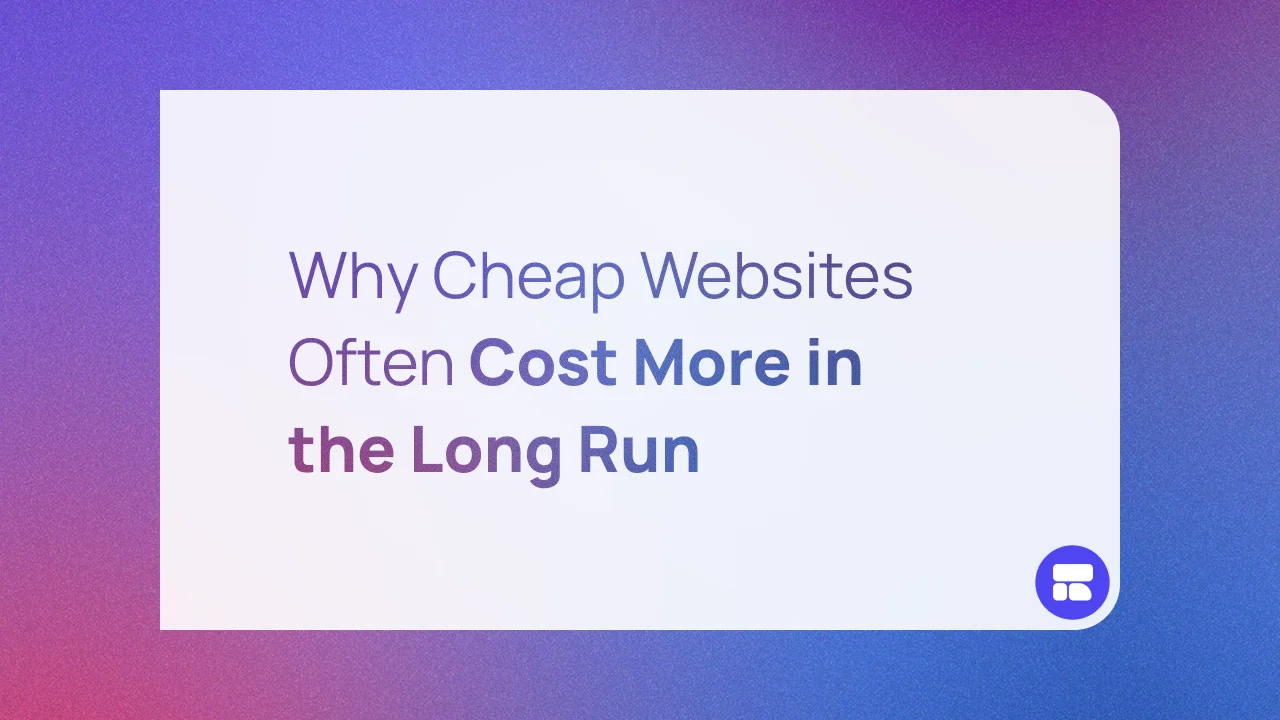
But here’s the uncomfortable truth: cheap websites are often the most expensive choice you can make. Not immediately, but slowly, quietly, and repeatedly.
Let’s break down why.
The Illusion of “Getting It Done”
Most budget websites focus on one thing only: launching something fast.
What they don’t focus on is whether that “something” actually works for your business.
To keep costs low, corners are cut:
- Strategy is skipped
- Templates replace thoughtful design
- Performance and scalability are ignored
The site exists, but it doesn’t perform. And that’s where the hidden costs begin.
When Cheap Design Kills Conversions
Your website isn’t just a digital brochure. It’s a salesperson that works 24/7.
Cheap websites often struggle with:
- Slow load times
- Poor mobile experience
- Confusing layouts
- Weak or missing calls to action
Visitors don’t complain, they just leave.
Every confused user is a missed opportunity. Over time, that’s far more expensive than the original build.
SEO Debt: The Cost You Don’t See Yet
Search engines care about structure, speed, and clarity. Cheap websites usually don’t.
Common issues include:
- Bloated code and unnecessary plugins
- No SEO-friendly hierarchy
- Poor accessibility (which also affects rankings)
The result?
You’re invisible on search, or stuck paying for ads to compensate.
Fixing SEO after the fact often means rebuilding the site anyway, which doubles your cost.
Maintenance Turns Into a Money Trap
Cheap websites are rarely built to be maintained easily.
You’ll often run into:
- Outdated themes that break on updates
- Plugins that conflict with each other
- No documentation or clean handoff
A “small change” becomes a support ticket.
A simple tweak turns into an invoice.
Over time, you’re paying continuously just to keep the site functioning.
Security Is Not Optional
Budget builds often skip:
- Proper security configuration
- Regular update strategies
- Safe hosting environments
A hacked site doesn’t just cost money to fix. It costs trust, reputation, and sometimes customers. One incident can wipe out years of savings.
The Inevitable Rebuild
This is the pattern many businesses follow:
- Launch a cheap website
- Outgrow it in 6–18 months
- Realize it doesn’t reflect the brand
- Rebuild from scratch
So now you’ve paid twice.
Not because your business failed, but because your website couldn’t keep up with success.
The Better Question to Ask
Instead of asking:
“How cheap can I get this?”
Ask:
“How long will this support my business without holding it back?”
A well-built website:
- Scales with growth
- Converts more visitors
- Costs less to maintain
- Doesn’t need constant fixing
It’s not the cheapest option upfront, but it’s almost always the cheapest option over time.
Final Thought
Cheap websites aren’t bad because they’re affordable.
They’re bad because they delay real costs until they’re unavoidable.
The smartest investment isn’t the lowest price.
It’s the one that won’t need replacing the moment your business starts winning.